
The Case for Evaluation
If your concrete patio or driveway is showing wear, you may not need a full tear-out. This blog breaks down when resurfacing can save you time and money—and when replacement is the only safe route.
In Virginia, where temperature swings, moisture, and shifting soils are common, knowing whether to choose concrete resurfacing or replacement depends on the type of damage, your budget, and long-term goals. Here’s how to decide which option fits your situation best.
When Is Resurfacing a Good Option?
Minor Surface Cracks & Discoloration
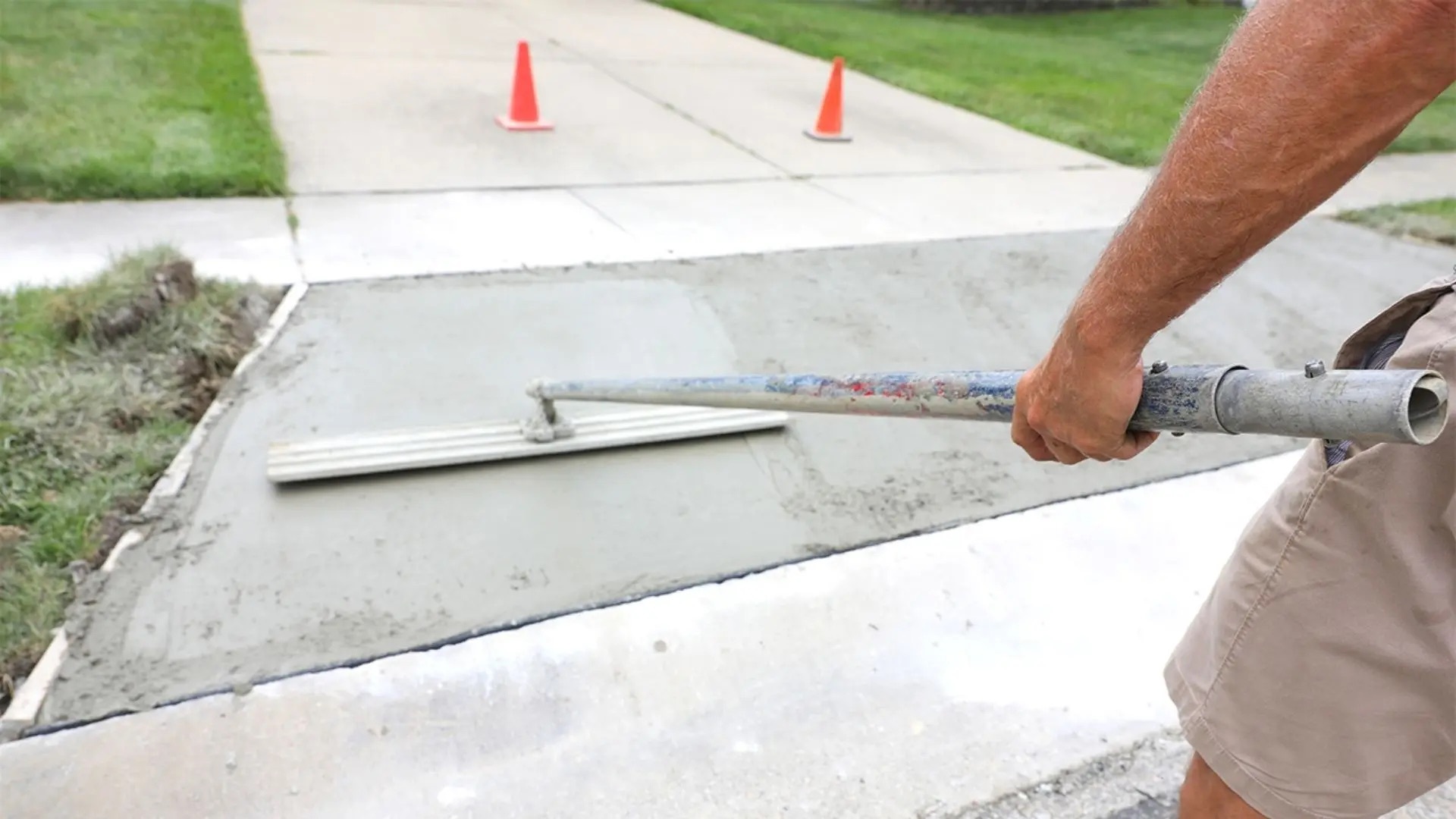
Resurfacing works well for cosmetic issues like light stains, discoloration, and minor cracks (less than 1/4 inch wide) that haven’t penetrated deep into the slab. If the base is sound, a concrete overlay VA approach can restore the look and function of your surface without starting over.
This method uses a thin layer of polymer-modified concrete applied over the existing slab. The overlay bonds with the old surface to create a refreshed, uniform appearance and added durability.
Budget-Friendly Overhauls
Replacing a concrete slab can be costly and disruptive. Resurfacing typically costs 30% to 50% less than replacement and can be completed in 1–3 days, depending on prep and curing time.
Homeowners looking for a quick visual upgrade for selling their home or improving curb appeal without digging up their yard find resurfacing to be a valuable option.
When Full Replacement Is Needed
Deep Cracks, Heaving, or Erosion
If your concrete has structural damage—including deep or widespread cracks, vertical displacement, crumbling edges, or major surface erosion—resurfacing is not enough. These issues often indicate problems with the subgrade or significant wear that cannot be corrected with an overlay.
In areas like Burke and Clifton, heavy clay soils can cause severe heaving or sinking. In these cases, the best solution is to replace the slab entirely, which includes rebuilding the base and installing proper reinforcement.
Code or Grade Changes
Virginia homeowners undergoing home renovations or landscaping updates may encounter new code requirements or slope/grade adjustments. If your concrete no longer meets proper elevation, slope, or ADA accessibility, replacement is the only option.
Replacing allows contractors to re-pour the slab to the correct height, slope, and drainage specifications. This is especially important for replace concrete driveway projects involving curbs, sidewalks, or garages.
Cost, Longevity & Curb Appeal
Which Option Adds More Value?
While resurfacing is cost-effective, it won’t last as long as new concrete. A resurfaced slab typically lasts 8–15 years, depending on wear, climate, and care. A new concrete pour lasts 25–40 years.
That said, resurfacing can still improve home value if the underlying slab is sound. It adds instant curb appeal and improves functionality. For long-term ROI or properties with heavy use, replacement remains the gold standard.
Time and Disruption Differences
Resurfacing is significantly less disruptive. No heavy demolition is involved, meaning less dust, noise, and inconvenience. It’s a great solution for homeowners who need to restore outdoor surfaces quickly and efficiently.
Replacement takes more time—up to a week or more—as it involves excavation, hauling away debris, rebuilding the subgrade, and curing the new slab. However, it results in a structurally sound, long-lasting surface.
Comparison Table: Resurfacing vs. Replacement
| Factor | Resurfacing | Replacement |
| Cost | Lower ($3–$7 per sq. ft.) | Higher ($8–$15 per sq. ft.) |
| Project Duration | 1–3 days | 5–8+ days |
| Best For | Surface cracks, fading | Structural cracks, erosion |
| Longevity | 8–15 years | 25–40 years |
| Disruption | Minimal | Significant |
| Added Curb Appeal | Moderate | High |
| Code/Grade Fixes | Not applicable | Fully customizable |
Table Explanation: If your surface is stable and the damage is mostly cosmetic, concrete resurfacing Virginia solutions can provide a quick, cost-effective facelift without the need for major construction. Resurfacing is especially useful for homeowners wanting to restore curb appeal or prepare for a property listing. However, for serious issues like foundation cracks, drainage concerns, or advanced wear, resurfacing merely covers symptoms without solving structural problems. In those situations, full replacement offers a longer-lasting, more secure investment that allows for updated reinforcement, slope adjustments, and code compliance. Choosing between the two depends not only on the damage but also on how long you plan to stay in your home, how much traffic the surface endures, and your goals for property value and peace of mind.
Repair vs Replacement Concrete: Which One Makes Sense?
When evaluating repair vs replacement concrete solutions, it’s important to define the difference. Repairs typically involve filling cracks, patching small areas, or applying topical treatments. These are short-term fixes that work for minor damage or appearance improvements but do not address underlying slab problems.
Resurfacing falls somewhere between repair and replacement. It covers a larger area than a basic patch, restoring aesthetics and some performance, but relies on the integrity of the original slab.
Concrete replacement, on the other hand, involves removing and re-pouring the entire slab with new subgrade support, reinforcement, and finishing. It’s the right solution for properties with foundational instability, severe cracking, or long-term wear.
Homeowners should weigh repair vs replacement concrete options based on the scope of damage, expected longevity, and return on investment. Temporary patching may save money now, but lead to recurring issues. A full replacement may seem costly upfront, but it delivers peace of mind and performance for decades.
Local Insights: Virginia Surface Conditions
In Arlington, older homes often feature concrete slabs with minor aging that are ideal candidates for resurfacing. However, in Woodbridge and Annandale, freeze-thaw cycles can lead to deeper cracks that demand full replacement.
Homeowners in Alexandria, where HOA guidelines may influence design and finish requirements, should consider whether a full pour offers more flexibility for customization.
Work with experienced professionals like Concrete Contractors Virginia, who can assess slab integrity, soil composition, and project goals to determine the right path.
FAQs
- Is resurfacing cheaper than replacement?
Yes. Resurfacing is generally 30% to 50% less expensive than full slab replacement. It avoids demolition, excavation, and hauling costs. However, it only works if the original slab is stable and undamaged below the surface. - How long does resurfaced concrete last?
With proper preparation and sealing, resurfaced concrete can last 10 to 15 years. Longevity depends on weather conditions, surface traffic, and maintenance. It’s not as long-lasting as a replacement but offers good value for minor upgrades. - Can I resurface over cracks?
You can resurface over hairline or shallow cracks after proper cleaning and filling. Larger or active cracks should be stabilized or repaired first. If cracks are structural, replacement is safer and more effective long term. - Does resurfacing raise the slab height?
Yes, slightly. Most overlays are 1/8″ to 1/4″ thick. This may affect transitions to adjacent areas like steps, doors, or drainage paths. In most cases, the height difference is negligible, but it should still be evaluated during planning. - What prep is needed before resurfacing?
The surface must be thoroughly cleaned, etched, and primed to ensure proper bonding. Loose concrete, dirt, oils, or sealers must be removed. Cracks and holes are patched before the overlay is applied. Proper prep is key to preventing peeling or bubbling.
Choose Smart, Build Better
There’s no one-size-fits-all answer when deciding between resurfacing and replacement. Each option has its place depending on your property’s condition, budget, and goals.
If your surface is sound but unattractive, resurfacing offers fast, cost-effective improvement. For deep damage or future-proofing, replacement delivers long-term durability and design flexibility.
Concrete Contractors Virginia helps homeowners weigh their options with honest assessments, expert guidance, and efficient execution. Don’t guess—get a professional opinion before committing.
Epoxy Flooring That Lasts – Get Your Free Estimate!

Leave A Comment