
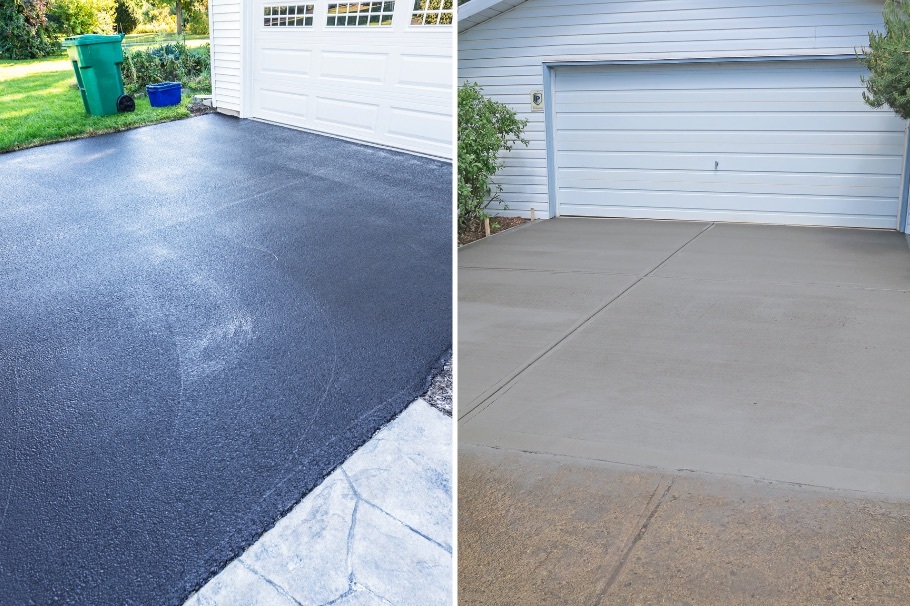
Concrete vs. Asphalt: Which Driveway Works Best in Virginia?
Choosing between concrete and asphalt for your Virginia driveway? From freeze-thaw resistance to visual appeal, this guide helps you decide which surface offers better value and longevity in our regional conditions.
Virginia’s diverse weather—hot, humid summers and icy winters—demands driveway materials that can withstand expansion, contraction, and daily wear. Here’s how concrete and asphalt compare.
While both options are widely used throughout the state, the right material often depends on specific property factors. Homeowners in rural areas may prioritize quick installation and affordability, making asphalt the go-to option. In contrast, suburban developments with HOA requirements or modern aesthetics may lean toward concrete for its design flexibility and long-term performance. Understanding your environment and maintenance capacity will help narrow down the best choice for your driveway investment.
Material Comparison for VA Climate
Heat & Freeze Resistance
Concrete resists high temperatures better than asphalt, which can soften and deform in extreme heat. This is particularly relevant in Northern Virginia’s summer months, where blacktop driveways may absorb excess heat and become sticky.
However, concrete is more susceptible to cracking in freeze-thaw cycles unless it includes air-entrainment additives. Asphalt is more flexible, making it slightly more forgiving in cold climates, though it may still crack if not maintained.
Maintenance Requirements
Concrete driveways require sealing every 3 to 5 years and occasional pressure washing to maintain their appearance. Cracks should be filled quickly to prevent water infiltration.
Asphalt needs more frequent resealing—usually every 1 to 3 years—and can deteriorate faster if exposed to oil, salt, or heavy UV. However, it’s easier and cheaper to patch.
In Burke and Arlington, where snow and de-icing are common, proper maintenance schedules extend both surfaces’ lifespan.
Cost, Lifespan, and Visual Appeal
Upfront Cost Breakdown
The average concrete driveway cost in VA ranges from $6 to $12 per square foot, depending on thickness and finish. Decorative options like stamping and staining increase costs.
Asphalt driveways typically cost $3 to $7 per square foot. This makes them more budget-friendly upfront, especially for longer driveways.
However, cheaper initial cost doesn’t always mean better value—long-term durability plays a big role.
Long-Term Value Analysis
Concrete driveways last 25 to 40 years with proper maintenance. They hold their color longer, resist UV degradation, and don’t rut under heavy loads.
Asphalt has a typical lifespan of 15 to 25 years. While it’s easier to repair, it also deteriorates faster, especially in areas with heavy trucks or tree root intrusion.
Over time, concrete often wins the cost-efficiency battle due to reduced maintenance and longer performance.
Comparison Table: Concrete vs. Asphalt Driveways
| Feature | Concrete Driveway | Asphalt Driveway |
| Average Cost (per sq. ft.) | $6–$12 | $3–$7 |
| Lifespan | 25–40 years | 15–25 years |
| Maintenance Frequency | Every 3–5 years | Every 1–3 years |
| Heat Resistance | High | Low (can soften) |
| Freeze-Thaw Durability | Moderate (may crack) | Flexible, more forgiving |
| Aesthetic Options | High (color, texture, stamping) | Limited (mostly black finish) |
| Environmental Impact | Light-colored = less heat absorption | Higher heat absorption |
Table Explanation: Asphalt is more cost-effective at installation but requires more upkeep. Concrete demands a higher investment but delivers longer-term results, more customization, and better durability in high-traffic or sunny areas.
Environmental & Curb Appeal Factors
Reflectivity & Stormwater Runoff
Concrete is more reflective, reducing the heat island effect and potentially lowering cooling costs. Light-colored surfaces also contribute to environmental sustainability.
Asphalt absorbs heat and contributes to localized warming. Additionally, improperly sloped asphalt can increase stormwater runoff, leading to pooling or erosion near your home.
Customization Options
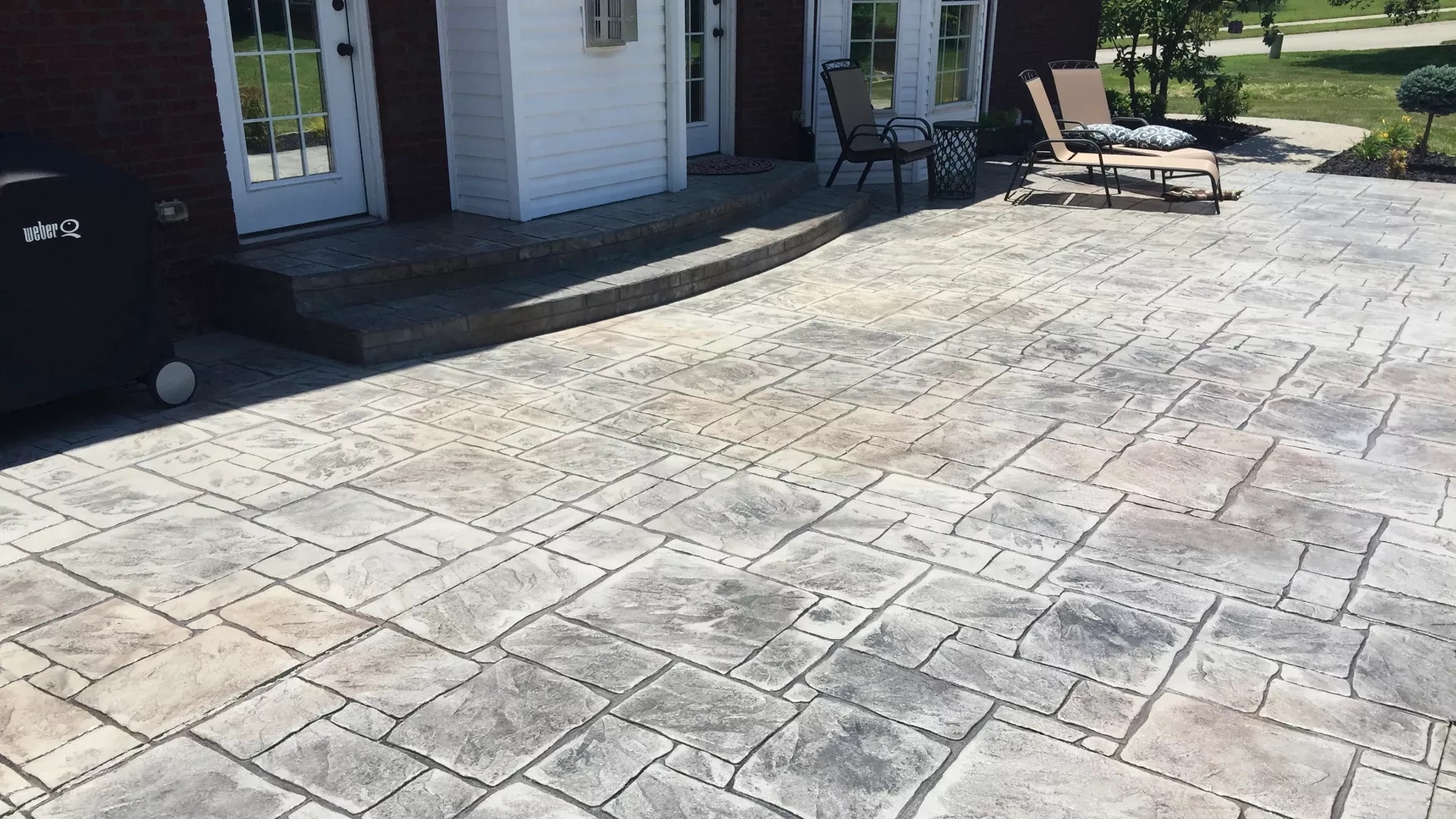
Concrete offers many finishes: broom, smooth, stamped, stained, or exposed aggregate. This allows homeowners to match their driveway to the home’s exterior.
Asphalt offers fewer customization options. While some may apply coatings or tints, the surface generally remains black.
In neighborhoods like Annandale and Alexandria, where curb appeal influences home value, concrete’s versatility provides a clear advantage.
Local Insights: Choosing for Virginia Conditions
Virginia’s topography and seasonal variation make driveway material selection more than just a design choice—it’s a strategic decision based on performance and resilience. In Woodbridge and Clifton, clay-heavy soil and frequent tree root encroachment demand reinforced concrete slabs with strategic expansion joints. These joints help mitigate cracking from natural soil movement and provide structural integrity across changing terrain.
In colder regions like Burke and Great Falls, repeated freeze-thaw cycles can wreak havoc on unsealed surfaces. Asphalt may fare better initially due to its flexibility, but if left unsealed or poorly drained, it will deteriorate faster. Concrete with proper air entrainment and slope design offers longer-term performance in these scenarios, provided regular maintenance is observed.
Shaded lots and homes near forested areas face additional challenges—moss, moisture buildup, and frost heaving are all more aggressive under limited sunlight. This is common in Oakton and Annandale, where homeowners should consider installing drainage channels and investing in sealing schedules.
Ultimately, no material performs optimally without professional input. Concrete Contractors Virginia specializes in climate-responsive installations tailored to local conditions, ensuring your driveway doesn’t just look great—it lasts for years.
Asphalt vs Concrete Lifespan: What You Need to Know
When considering longevity, it’s crucial to compare how each material ages in Virginia’s demanding climate. Asphalt vs concrete lifespan isn’t just a matter of years—it’s about maintenance, usage, and environmental exposure.
Concrete driveways can last 25 to 40 years with proper care. Reinforced concrete with adequate expansion joints and an air-entrained mix resists cracking and weather degradation. Sealing and occasional cleaning can preserve its structural integrity and appearance for decades.
Asphalt driveways typically hold up for 15 to 25 years. Their flexibility allows them to expand and contract more easily during freeze-thaw cycles, but UV rays, oil stains, and heavy loads can wear them down faster. Frequent sealing is required to extend their life.
In essence, concrete offers a longer lifespan and lower lifetime cost, while asphalt provides faster installation and easier spot repairs. The trade-off is upfront cost versus recurring maintenance.
Driveway Materials Comparison: Choosing the Best Fit
For homeowners evaluating paving options, a driveway materials comparison is essential. Concrete and asphalt dominate the market, but they cater to different needs.
Concrete is best for longevity, customization, and property value. Its resistance to heat and load makes it suitable for suburban and upscale properties. Asphalt, by contrast, is budget-friendly and ideal for longer rural driveways or short-term solutions.
Consider factors like local weather, maintenance tolerance, budget, and visual expectations when selecting your driveway material. Professional input ensures your surface delivers on both performance and aesthetics.
FAQs
- Which driveway lasts longer in the VA climate?
Concrete typically lasts longer than asphalt in Virginia if maintained properly. While asphalt is flexible, it degrades faster under heat and heavy rain unless sealed regularly. Concrete handles weight better and holds up to UV rays, but may crack if not poured correctly. Choosing air-entrained concrete and reinforcing steel can increase lifespan. - What’s cheaper to install: concrete or asphalt?
Asphalt is cheaper upfront, with costs ranging from $3 to $7 per square foot. Concrete costs $6 to $12 per square foot. However, concrete lasts longer and requires less frequent maintenance. Over two decades, concrete has often proved more cost-efficient. Consider lifecycle costs, not just installation fees. - Which surface cracks more in freeze-thaw cycles?
Concrete is more prone to cracking if not treated with proper additives. However, asphalt can also crack if it becomes brittle or loses adhesion. Both need proper drainage and slope to minimize freeze-thaw damage. Regular sealing and quality installation help reduce cracking on either surface. - Can concrete be sealed for better performance?
Yes. Sealing concrete protects it from water, stains, and salt damage. Sealers should be applied every 3 to 5 years, depending on climate and traffic. In Virginia, sealing before winter helps prevent cracking and surface spalling. High-quality sealers enhance durability and appearance. - Does asphalt fade faster than concrete?
Yes. Asphalt’s black surface oxidizes under sunlight, fading to gray over time. Concrete maintains its light tone better, especially if pigmented or sealed. While asphalt can be resurfaced, color options are limited. Concrete offers more visual longevity and curb appeal.
Making the Smart Surface Choice
Both concrete and asphalt have a place in Virginia driveways, each offering distinct advantages depending on your property’s unique needs. The final decision should factor in your available budget, aesthetic preferences, usage demands, and long-term ownership goals.
Concrete is ideal for those who seek durability, design flexibility, and low maintenance over decades. It enhances curb appeal, reflects heat, and stands up well to vehicle loads and harsh sunlight. The upfront cost is higher, but the long-term payoff includes fewer repairs and greater home value.
Asphalt, while less expensive initially, works well for homeowners needing a faster install or those who anticipate replacing or relocating their driveway shortly. It’s also preferred for longer rural driveways where budget is key.
Ultimately, the choice is not just about material—it’s about strategy. A driveway is the first impression of your home. With the expert insight of Concrete Contractors Virginia, you’ll get tailored recommendations based on your soil type, drainage, and neighborhood standards.
Trust the team that understands regional conditions and prioritizes your property’s long-term performance.
Upgrade Your Floors Instantly – Get a Free Epoxy Quote Today!

Leave A Comment