
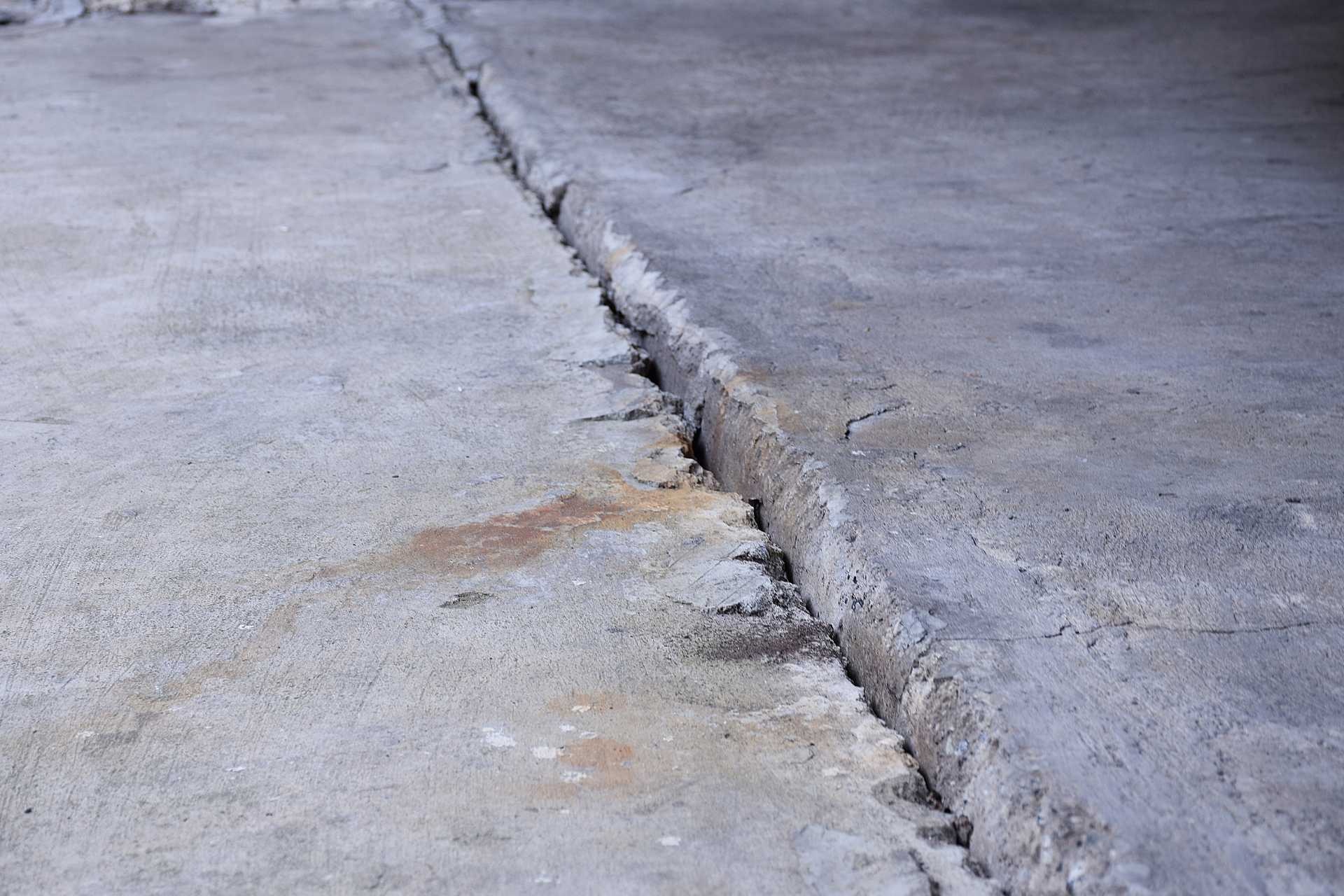
Why Cracks Form—and Why They Matter
Cracks are the most common issue in residential and commercial concrete. While some are cosmetic, others compromise structural integrity. Learning how to prevent concrete cracks in VA starts with understanding the causes, the best prevention practices, and how local conditions play a role.
From driveways and patios to foundations, Virginia homeowners deal with unique challenges like clay-heavy soil, freeze-thaw cycles, and high humidity. A crack-free concrete slab not only improves curb appeal—it enhances safety, extends surface life, and reduces repair costs.
Causes of Cracking in Concrete
Shrinkage & Poor Curing
When concrete dries too quickly, it shrinks, leading to cracks. This happens when it’s poured on hot, windy days without proper curing methods. Lack of moisture retention reduces internal bond strength and accelerates drying.
To follow concrete curing best practices, concrete should be kept moist for at least 7 days. Using curing compounds, wet burlap, or plastic sheeting helps maintain hydration and control the rate of evaporation.
Soil Movement & Subgrade Failure
Virginia’s varied soil types, especially clay in regions like Clifton and Burke, can expand and contract significantly. If the subgrade isn’t properly compacted or stabilized, it causes slab displacement and cracking.
Subgrade failure is also caused by erosion, poor drainage, or organic material beneath the slab. Installing a granular base and moisture barrier helps reduce these risks.
Prevention During Installation
Proper Base Compaction
A stable subgrade is the foundation of a durable slab. Soil should be compacted in layers to 90–95% of its maximum dry density. Any soft spots can lead to uneven settling and future cracks.
In regions like Annandale, where rainfall and underground moisture are common, contractors must take extra care with base preparation to prevent future shifting.
Use of Rebar & Control Joints
Adding steel reinforcement, such as rebar or welded wire mesh, increases tensile strength and reduces cracking. This is especially important in rebar concrete slab Virginia builds, where foundations support heavy structural loads.
Equally important are control joints concrete techniques. These planned, cut-in joints allow controlled cracking along pre-defined lines. They should be spaced 24–36 times the slab thickness (in inches), typically every 8–12 feet.
Aftercare & Ongoing Maintenance
Sealing & Drainage Control
Concrete is porous. Without a quality sealer, water seeps into micro-cracks and freezes, expanding the damage. Sealing every 3–5 years prevents moisture ingress and resists stains.
In sloped lots or those near tree lines, drainage control is equally vital. Redirecting runoff away from slabs with swales, French drains, or downspout extensions keeps subgrade materials dry and stable.
Load Restrictions
Overloading slabs with heavy vehicles, planters, or storage units stresses the concrete and creates hairline cracks. Be mindful of point loads on garage floors, patios, or walkways.
Contractors often design concrete thickness and rebar layout based on expected loads. Respecting these limits keeps slabs crack-free longer.
Comparison Table: Risk Levels by Practice
| Practice | Impact on Crack Risk | Notes |
| No curing method used | Very High Risk | Leads to plastic and shrinkage cracks |
| Poor base compaction | High Risk | Causes settling, uneven pressure |
| No rebar or mesh | High Risk | Tensile failure is likely with temperature changes |
| Proper curing for 7+ days | Low Risk | Stronger surface, better internal bonding |
| Rebar + control joints | Very Low Risk | Allows movement without uncontrolled cracking |
| Regular sealing and drainage | Very Low Risk | Protects from water damage and soil erosion |
Table Explanation: Preventing cracks isn’t about one perfect method—it’s about combining practices strategically. From control joints concrete to thorough compaction, each layer reinforces the next, creating a system that resists stress, moisture, and movement. Just as a chain is only as strong as its weakest link, your slab’s durability depends on how well each preventative step is executed. Overlooking curing or skipping rebar can undermine the whole project. When properly integrated, these techniques dramatically reduce the risk of shrinkage, displacement, and structural failure—resulting in a longer-lasting, more resilient surface.
Local Insights: Cracking Hazards Across Virginia
In Arlington and Alexandria, older homes often suffer from improperly compacted subgrades. Replacing slabs in these areas without correcting the base leads to recurring cracks.
In high-water-table areas like Woodbridge, slabs must include proper drainage strategies and vapor barriers to protect against hydrostatic pressure.
The freeze-thaw conditions of Oakton make curing and sealing essential. Even a hairline crack can grow in winter if water enters and freezes. Contractors must tailor solutions to Virginia’s diverse environments for lasting results.
FAQs
- What causes new concrete to crack?
New concrete often cracks due to rapid drying (shrinkage), improper subgrade prep, or missing joints. Shrinkage cracks can appear within hours of finishing. Controlling temperature and moisture is critical during the curing process. - How deep should control joints be?
Control joints should be one-quarter the depth of the slab. For a 4-inch slab, cuts should be at least 1 inch deep. Joints must be placed as soon as the concrete can handle tooling or saw cutting without chipping. - Does sealing help prevent cracks?
Yes. Sealers create a protective barrier against water, chemicals, and freeze-thaw cycles. They reduce surface wear and slow the penetration of moisture that leads to crack expansion. Use breathable sealers that allow vapor escape. - Should I water the concrete during curing?
Yes—this is part of concrete curing best practices. Moist curing (watering, wet blankets, or plastic) ensures slower evaporation and stronger hydration. Avoid excessive surface water or high-pressure streams that damage the finish. - How can I fix small cracks myself?
Hairline cracks can be filled with flexible concrete caulk or epoxy. Clean the area, remove dust, and apply product per the manufacturer’s instructions. For deeper or growing cracks, consult a contractor. DIY fixes are temporary if the underlying causes persist.
Build it Right, Keep it Strong
A crack-free concrete slab starts with proper preparation and continues with smart maintenance. While not all cracks are avoidable, many are preventable with the right knowledge and techniques. Understanding the specific risks tied to Virginia’s climate and soil types equips homeowners to make better decisions before and after installation.
Preventing cracks isn’t just a technical task—it’s an investment in your home’s long-term value, safety, and appearance. From selecting the correct reinforcement and mix design to ensuring base compaction and timely joint placement, each detail contributes to a concrete system built to last.
Professionals like Concrete Contractors Virginia don’t just pour and finish; they analyze site conditions, recommend tailored solutions, and apply concrete curing best practices to minimize risk and maximize durability. Their hands-on approach, combined with regional experience, is what sets apart a surface that endures from one that doesn’t.
Whether you’re preparing for a new patio, driveway, or foundation, don’t overlook crack prevention. It’s easier—and more cost-effective—to build it right the first time than to repair it later.
Say Yes to Stunning Floors – Call Now for a Free Consultation!

Leave A Comment